From San Antonio to Appalachia: GEAR UP Research That's Changing the Game
Twice a year, GEAR UP professionals from across the country come together to ask a simple but important question — what does the data tell us about what works?
Held alongside the 2026 Directors' Summit in San Antonio, Texas, the spring College and Career Readiness Evaluation Consortium (CCREC) meeting brought together over 100 professionals from 58 member grants across 29 states to network, build data and research capacity, and collaborate on a longitudinal study examining the relationship between GEAR UP services and student outcomes.
Alex Sutherland from Montana GEAR UP and Melissa Gattuso from Xcalibur coached the community on building local data dashboards using CCREC data files — turning raw data into an interactive tool grantees can actually use. Jacque Deahl from GEAR UP Idaho led a session on communicating the work of GEAR UP to multiple stakeholder groups and understanding the perspectives, values, and goals of different audiences.
But the learning didn't stop there — the convening also featured a poster session that showcased original research from the field.
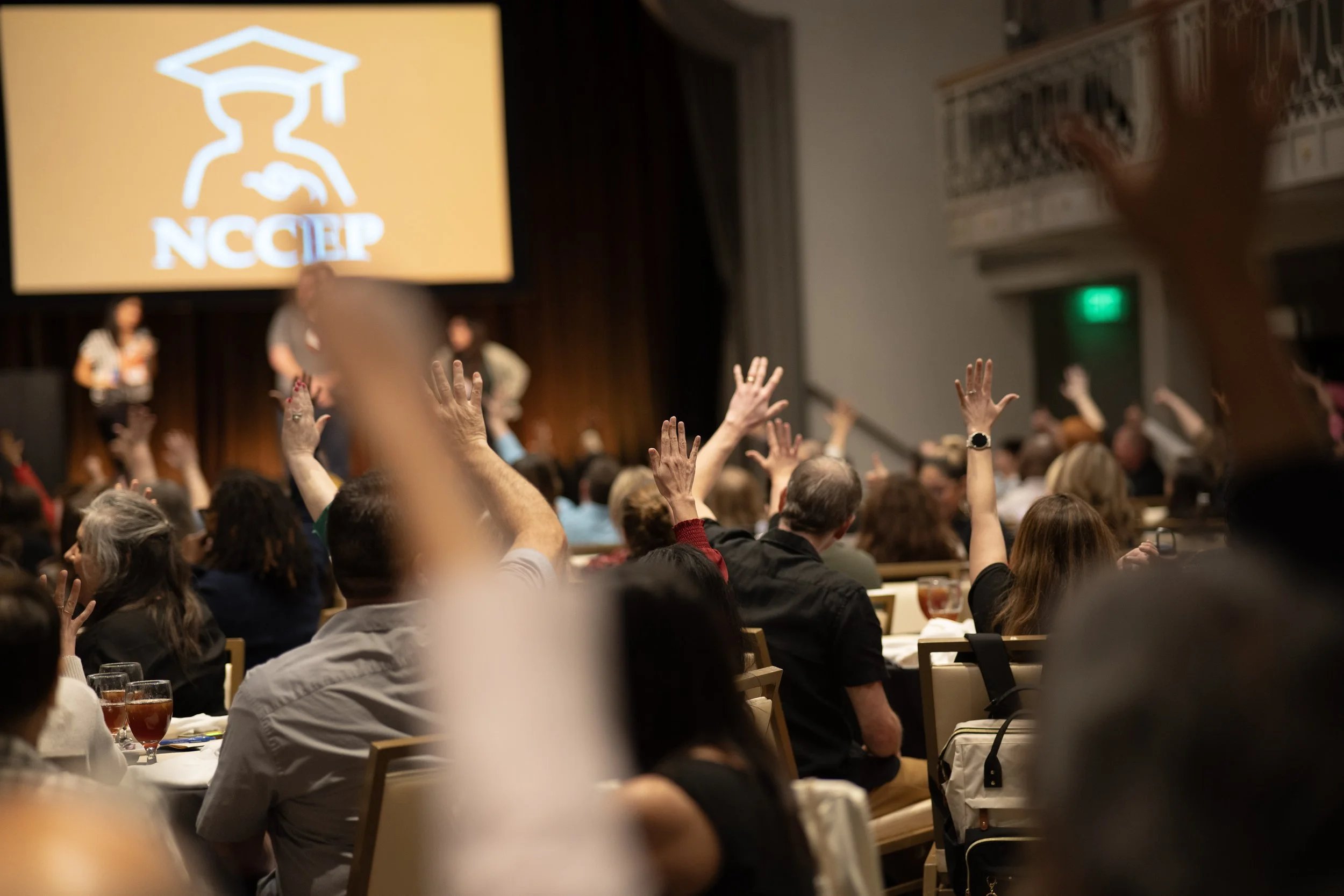
The poster session brought six research teams to the floor. Among them was North Carolina’s Appalachian GEAR UP Partnership — Corinne Smith, Dr. Jui-Teng Li, Ginger Parks, and Dr. Kathryn Watson — and their findings are worth sitting with.
Their study, Pathways to College Readiness in Appalachia: Evidence from GEAR UP, confirmed what many of us believe but don't always get to prove — GEAR UP participation increases postsecondary enrollment. That impact was especially strong among male students. But the standout may be this: just two hours of parent financial aid support over a 7-year period was associated with lower-performing students being three times more likely to enroll. One workshop. One good conversation at a school event. That's all it took.
The implications: prioritize low-performing male students for consistent services, protect parent-focused financial aid programming even at low dosage, and meet families where they already are — at games, open houses, and school events.
The Appalachian team's work is a powerful example of what GEAR UP research can reveal — and they're not the only ones doing it. Stay tuned as we continue highlighting research from GEAR UP programs across the country.